Amazfit Helio Strap Pro Launches as Screen-Free Wearable for Hybrid Athletes
The Helio Strap Pro drops. Screen-free, two-piece system. $199.99 upfront, no monthly fee.

Forbes broke the news: Amazfit positions the unit for "hybrid" and Hyrox athletes, leveraging its 2024 Hyrox partnership. Two body-position sensors separate limb movement from torso work. Sixty-plus tracking modes in the lineup. HIIT included.
What $199.99 ships and what the sensors actually do
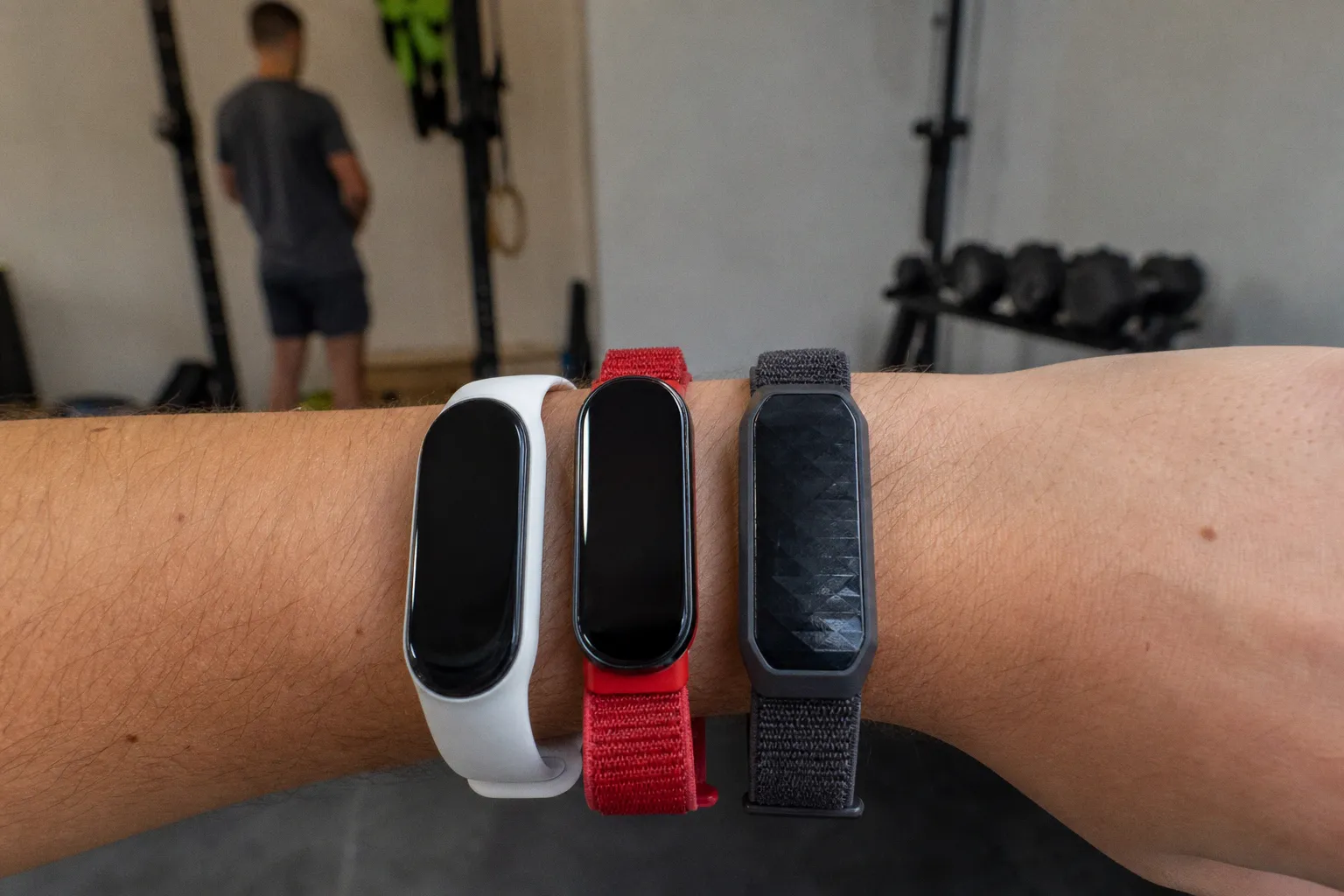
Two units, one box. Helio Core Motion HR lives on the upper arm. Helio Core Motion Waist clips around the waist. Two bands ship with the HR piece — Amazfit recommends the arm band but includes a wrist band as fallback.
Battery: up to 11 days on the arm unit, 40 days on the waist. 5ATM water resistance on both. No display, anywhere — a deliberate distraction-killing design choice.
Upper-arm placement is the load-bearing spec. Wrist optical HR sensors drift badly during high-intensity intervals, where sweat, contact pressure, and motion artifact all combine. Arm placement sits closer to the chest, with tighter compression and less motion artifact. If the optical sensor holds spec, HR data during HIIT sets should beat a typical wrist unit.
The two nodes track independently and merge in software. The arm unit reads heart rate. The waist unit reads torso translation. Together they isolate limb-driven reps — ski strokes, rowing pulls, wall balls — from full-body work like sled pushes. Amazfit calls the architecture a "multi-position movement system."
For Hyrox athletes, post-session breakdown is the headline feature. The Zepp app separates each discipline: SkiErg time, row split, sled push time, wall ball set count. Each surfaced individually.
For home HIIT, the value is indirect. Sled work doesn't fit a living room. But heavy bag rounds, kettlebell flows, jump rope intervals, and burpee sets all run cleaner with movement isolation than the step-count and accelerometer guesses most wrist trackers default to. If HR tracks accurately, interval prescription tightens. Most consumer tracker HR data during intervals is unreliable enough to ignore.
At launch: strap needs a watch
Full Hyrox Race and Simulation modes require pairing with an Amazfit Balance 3 or Balance Ultra watch. The strap alone does not unlock those modes. Amazfit confirmed this may change — no timeline given.
Sixty-plus activity modes work on the strap alone, HIIT and running included. The strap's marquee feature — discipline-level breakdown — does not.
ROI check
Whoop starts at $25/month. Helio Strap Pro: $199.99, once. Year one savings vs Whoop: roughly $100. Year two onward: $300 per year recovered.
Whoop delivers a wrist sensor plus an analytics subscription. Helio delivers two body-position sensors, no fee, no screen. Math favors Helio if sensor accuracy holds and the Zepp workflow fits.
Buy if subscription-fatigued and training mixed-discipline work. Upfront cost math holds, and the dual-sensor architecture addresses a real Hyrox data gap. Pass if standard HIIT with occasional runs — wrist optical or chest strap covers HR, and nothing here changes your training. Consider if Hyrox-competitive or hybrid-focused — discipline-level post-session data is the actual product, and the $200 entry buys it without recurring fees.