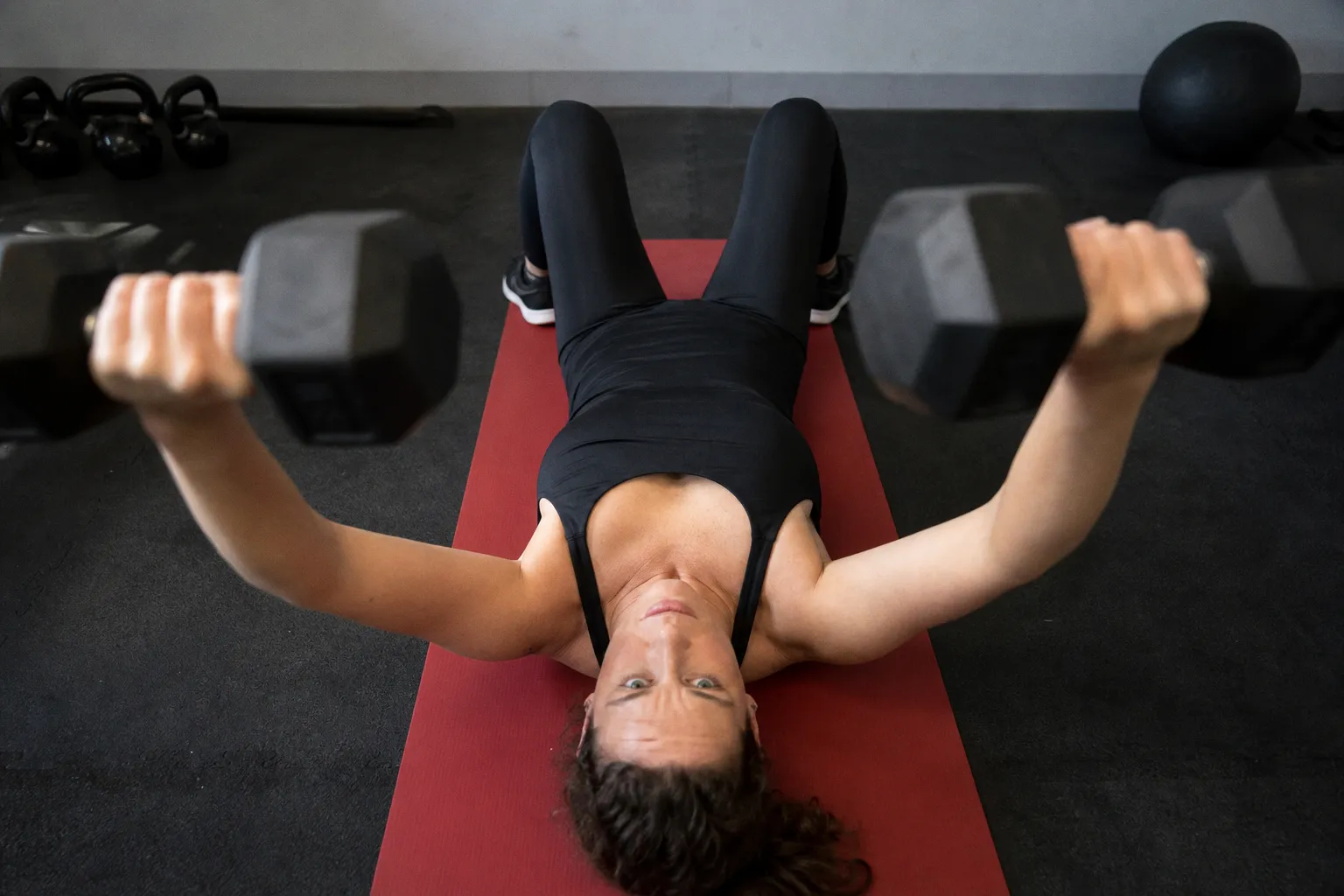
You know that moment — maybe ten minutes into your third round of burpees — when your legs suddenly feel like they're packed with wet sand and the only thing pulling you through the final interval is spite? That sensation has a name, and it isn't laziness.
The Energy Crash Nobody Warns You About
It's the moment your working muscles run out of readily available glucose, and it's the single most common reason home HIIT sessions fall apart before the timer buzzes.
High-intensity interval training torches through glycogen at a rate that steady-state cardio simply doesn't approach. Every time you push into that all-out zone — the sprint, the jump squat, the mountain climber burst — your body pulls from intramuscular glycogen stores to keep your fast-twitch fibers firing. When those stores aren't topped off beforehand, the kinetic chain starts to break down. Your hips stop articulating smoothly through the squat. Your shoulders lock up mid-press. The whole interconnected web of fascia and muscle that should be working as one seamless unit begins to seize, and suddenly the workout you planned is the workout you survived.
This is precisely why what you eat in the two hours before you press play matters more than almost any other variable in your training. And yet, for a surprising number of home fitness enthusiasts, "pre-workout nutrition" still means either nothing at all or a mystery powder from a tub with a lightning bolt on the label. Neither approach serves you well.
For related context, see Prime Day 2026: Smart Home Brands Deliver Major Savings on Home Comfort, Automation,.
Your muscles don't run on motivation. They run on glycogen — and glycogen doesn't care how committed you are to finishing the workout.
Reading the 3:1 Carbohydrate-to-Protein Ratio
The research around pre-workout fueling for HIIT consistently points toward one macronutrient relationship: roughly three to four grams of carbohydrate for every one gram of protein. This ratio isn't arbitrary. Carbohydrates top off glycogen and raise blood glucose for the immediate burst of energy that high-intensity intervals demand. A modest amount of protein begins amino acid delivery to working muscle, helping to blunt the catabolic effect of intense effort without sitting in your stomach like a brick.
The mistake most people make is leaning too heavily on one macronutrient and starving the other. A plain banana gives you quick fuel but nothing to anchor muscle preservation. A chicken breast gives you protein but practically no glucose and far too much fat to digest before sprint intervals. The sweet spot is a small, balanced snack that your body can break down quickly and route into circulation before your warm-up even ends.
Here's what that ratio looks like in real, edible terms:
| Snack Option | Approx. Carbs | Approx. Protein | Best Timing | Why It Works |
|---|---|---|---|---|
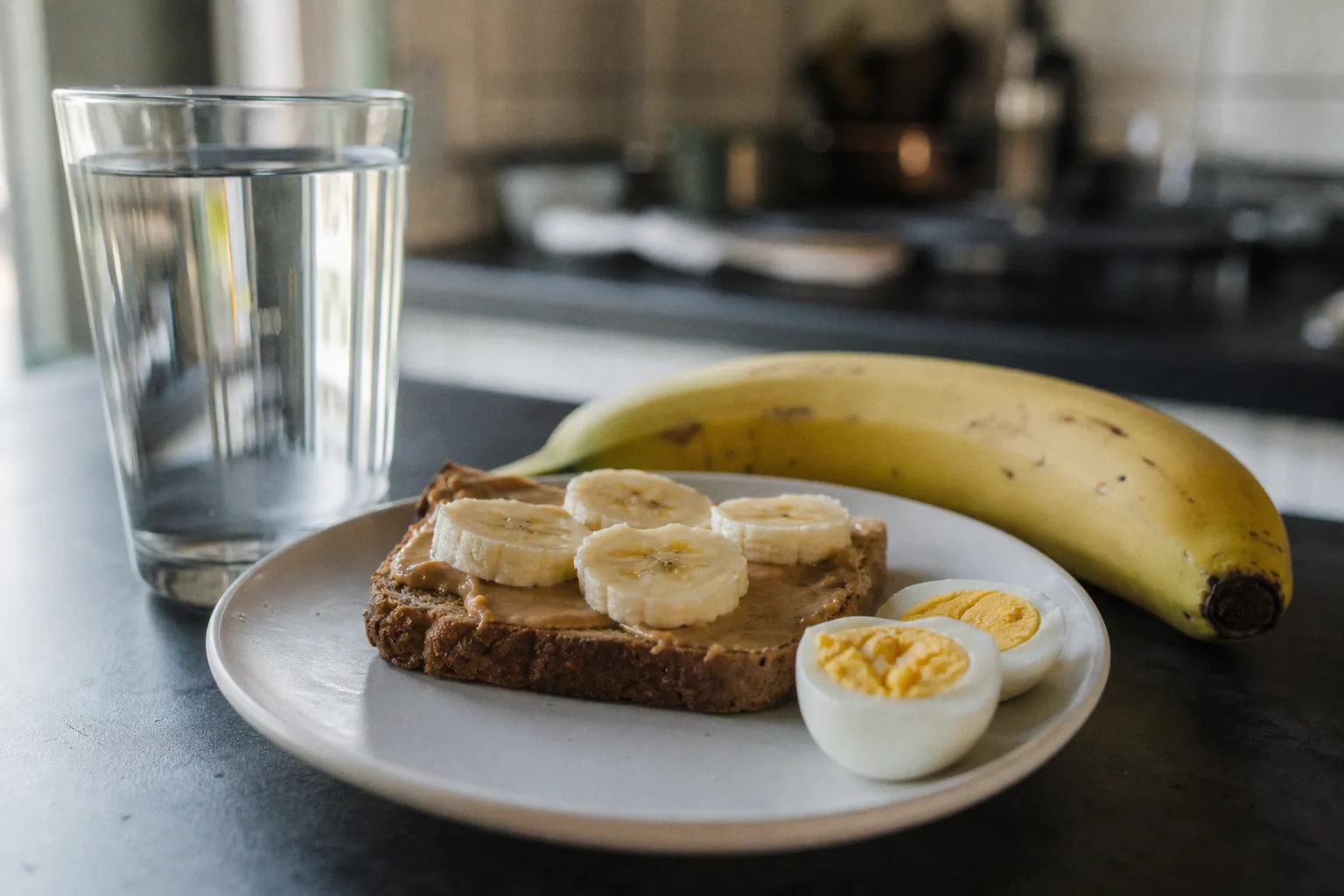
| Banana + 1 tbsp almond butter | 27 g | 4 g | 60–90 min before | Quick glucose with a touch of fat for satiety |
| Greek yogurt (plain, low-fat) + honey | 22 g | 12 g | 60 min before | Built-in 3:1 ratio, easy on the gut |
| Toast (white or sourdough) + jam | 30 g | 3 g | 30–45 min before | Rapid glycogen refill, very low fiber |
| Rice cake + small scoop whey | 20 g | 8 g | 45–60 min before | Light, fast-digesting, easy to portion |
| Apple + a few slices turkey | 20 g | 6 g | 60 min before | Balanced, familiar, no digestive drama |
Notice the pattern. Every option is built around simple, easily digestible carbohydrates with just enough protein to participate in muscle preservation. None of them ask your gut to do heavy lifting while your cardiovascular system is already demanding maximum blood flow.
The Timing Window: Why 30 to 120 Minutes Matters
Even the perfect snack becomes a problem if it lands in your stomach at the wrong moment. The digestive tract is a remarkably greedy system when it comes to blood supply, and during HIIT, your body aggressively redirects circulation toward working muscles and away from digestion. Eat too close to your first interval and you'll feel that mismatch almost immediately — the nausea, the side stitch, the uncomfortable pressure under your ribs that has nothing to do with your form.
The widely supported window is 30 to 120 minutes before exercise, and the exact position within that window depends on what you ate and how much. A larger meal with more complex carbohydrates sits closer to the two-hour mark, because gastric emptying takes longer and your body needs time to convert those carbohydrates into usable blood glucose. A lighter snack — the toast-and-honey type — works best in the 30-to-60-minute zone, where the carbohydrates are simple enough to enter circulation quickly but there's still a buffer before the warm-up begins.
One practical way to read your own body: notice where the tension gathers. If you feel sluggish and heavy through your first set, you probably ate too much or too late, and blood is pooling in your gut instead of your quads. If you feel light-headed by minute eight, you either under-fueled or you waited too long and the glucose spike has already crashed. Both sensations are feedback, and both are easy to correct once you start paying attention.
The Bloating Trap: What to Leave Off the Plate
High-fat and high-fiber foods are the two categories that derail more home HIIT sessions than any other variable. Both slow gastric emptying, which means they linger in the digestive tract far longer than you want them to. During a HIIT session — with the constant jarring of jumping, the rotational forces of mountain climbers, the compression of burpees — anything still sitting in your stomach becomes a liability. Cramping, bloating, and the particular misery of mid-workout nausea are almost always traceable to a pre-workout choice that included too much fat, too much fiber, or both.
This is why the standard "healthy" breakfast often backfires when followed by a morning HIIT session. The avocado toast with seeds. The oatmeal loaded with berries and chia. The high-fiber protein bar marketed as "fuel." All of these are perfectly nutritious foods — just not in the ninety minutes before you sprint. Save them for your post-workout meal or your recovery window, when your body can actually process them without competing against your cardiovascular demand.
Dairy is another frequent offender, particularly for anyone with even mild lactose sensitivity. Greek yogurt tends to be fine because the fermentation process breaks down most of the lactose, but milk, cream-based smoothies, and soft cheeses can create the kind of sluggish, gassy discomfort that no amount of willpower powers through. The encouraging news is that this category of problem is entirely fixable. Once you know what to leave out, the list of what to include becomes refreshingly short and easy to remember.
If a food makes you feel full while you're still chewing, it will make you feel miserable while you're working out.
Hydration: The Forgotten Half of Fueling
You can time your snack perfectly and nail the 3:1 ratio, and you will still underperform if your hydration is off. Water is the medium through which every metabolic process connected to your workout actually happens — glycogen mobilization, oxygen transport, joint lubrication, temperature regulation. When you're even mildly dehydrated, all of these systems downshift, and the cost shows up first in your high-intensity intervals, where output depends on rapid physiological response.
The standard guideline breaks hydration into two phases. Two to three hours before training, drink roughly 16 to 20 ounces (about 500 to 600 milliliters) of water. This gives your kidneys time to process the fluid and your plasma volume time to expand before the session starts. Then, 20 to 30 minutes before you begin, top off with another 8 ounces (240 milliliters). By the time your warm-up ends, your body should be operating from a state of adequate fluid balance rather than playing catch-up.
During the session itself, small frequent sips are usually enough for sessions under an hour — which covers most home HIIT formats. For longer sessions or for anyone training in a warm environment, an electrolyte drink with modest sodium content can help retain the fluid you're taking in rather than losing it to rapid sweating. The key is to sip steadily rather than gulp, because flooding an empty stomach with cold water right before burpees is its own form of digestive punishment.
Whole Foods Over Powders: The Honest Case
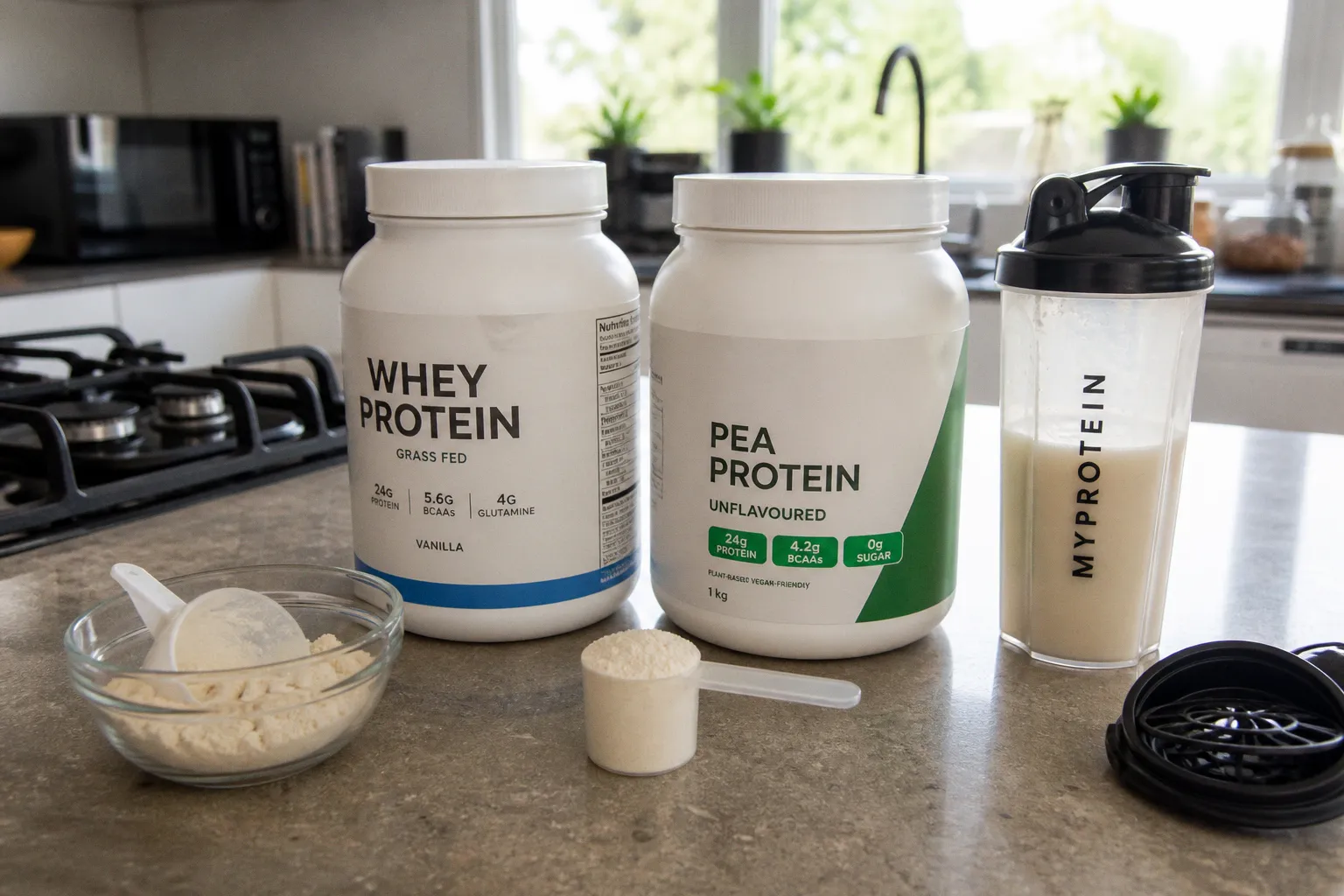
The pre-workout supplement industry is enormous, glossy, and almost entirely unnecessary for the home fitness audience. Those brightly packaged powders with proprietary blend labels and names like "Pump Matrix" or "Neuro-Focus Complex" are selling an experience — the tingling skin, the aggressive energy, the ritual of mixing a neon drink — rather than a measurable performance advantage. For most recreational athletes doing home HIIT, whole foods deliver the same carbohydrate and protein payload with better digestive tolerance, fewer questionable additives, and a fraction of the cost.
There is nothing wrong with a scoop of whey protein or a simple carbohydrate powder if that's what fits your routine. They are tools, and useful ones, particularly when time is short and you need something portable. But the framing matters: supplements supplement. They are not the foundation of a fueling strategy, and treating them as such skips over the much more important variables of meal composition, timing, and hydration that actually move the needle on performance.
The encouraging part of all of this — and the part I find genuinely exciting as someone who thinks about how the body's systems work together — is that the same interconnected principles apply everywhere. The fascia that releases beautifully after a mobility session responds to hydration the same way your working muscles respond to carbohydrate availability. The kinetic chain that fires smoothly through a clean squat is the same chain that depends on steady blood glucose to articulate through every joint without restriction. We are not juggling a dozen separate systems. We are managing one body, and when the inputs are right, the output is almost effortless.
A final practical note, because most of us are not training in a vacuum. If your day is already packed — a full job, family obligations, maybe even exploring a side venture from your kitchen table — the smartest pre-workout plan is the one you can actually repeat tomorrow. Pick one snack from the table above that you tolerate well. Anchor it to a consistent time before your usual session. Pair it with the two-phase hydration protocol and nothing else. Run that for two weeks without changing anything else, and notice what shifts: the energy curve through your intervals, the recovery between rounds, the absence of that mid-workout wall. That's your baseline. Everything else is refinement on top of a foundation you already built.