Nike Strength App: A New Approach to Progressive Home Calisthenics
According to Business Insider, Nike has separated its strength content into a standalone Nike Strength app built around progressive calisthenics and home-based resistance training.
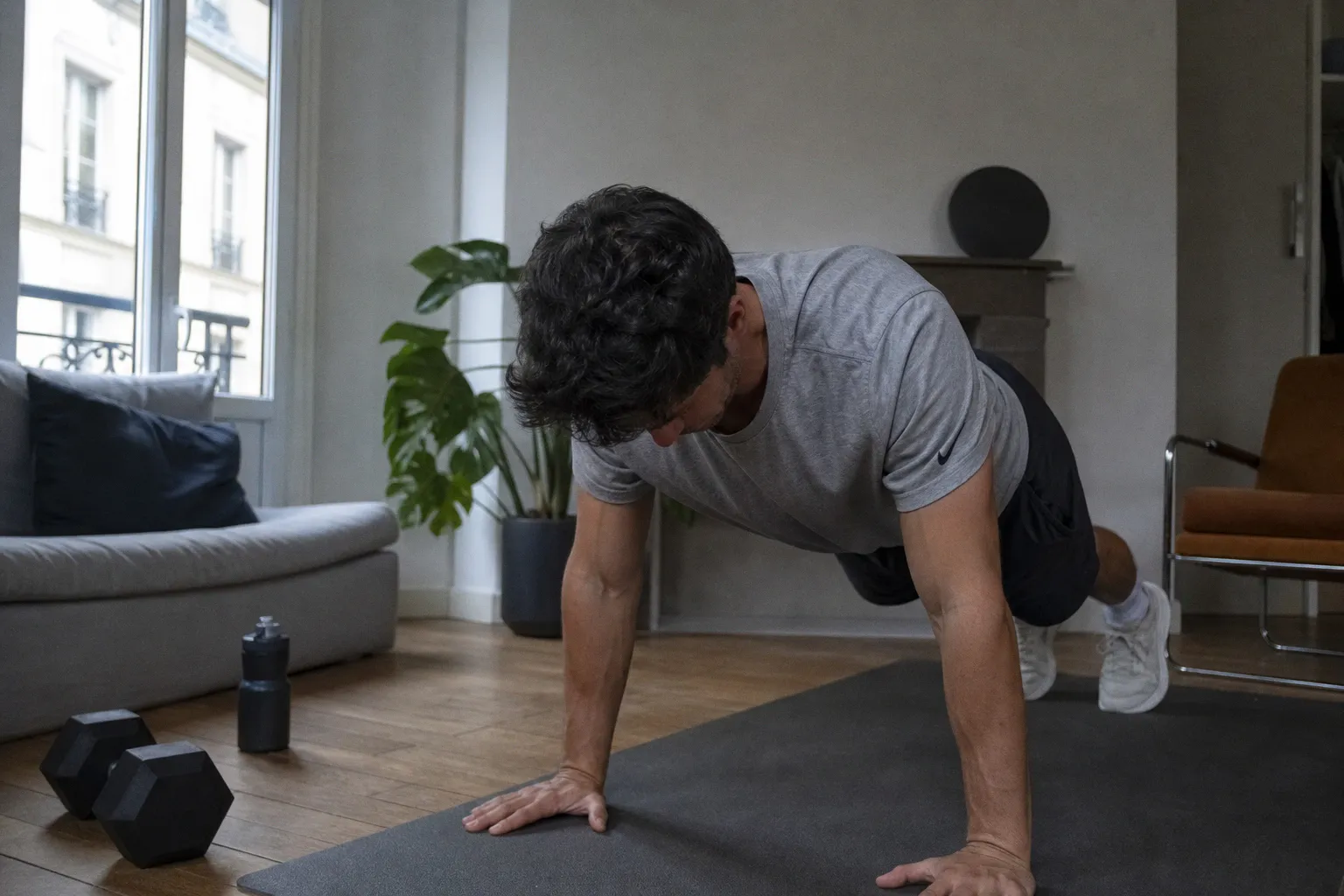
That matters if your training keeps stalling at the same loose push-ups, rushed squats, and half-range rows: a dedicated strength track should put progression—not random sweat—at the center of the session.
The timing is sharp. Home training platforms are moving hard toward more guided bodyweight work, from Peloton’s camera-based form feedback to Tonal’s synchronized lifting sessions. But no app can retract your scapulae, brace your trunk, or lock out a rep for you. You still have to do the work cleanly.
Progressive means stricter, not merely harder
The useful part of a calisthenics-focused app is not the logo or the exercise library. It is the promise of progression. Your bodyweight is resistance, but only when you control the leverage, range, tempo, and position.
Do not chase the hardest variation because it looks athletic on screen. Build the movement you can own.
For pushing, set a hollow-body position first: ribs down, glutes squeezed, hands planted with intent. Lower under control, keep the elbows working without letting the shoulders dump forward, then press until the top position is finished. If you cannot hold that line, elevate the hands. Regression is not retreat; it is the version that lets you load the correct pattern.
For pulling, start by setting the shoulders. Pull the shoulder blades down and back before you bend the elbows. Do not turn every row into a shrug. If your home setup limits load, make the rep stricter—pause at contraction, extend fully under control, and keep the torso from twisting to steal range.
Home resistance needs a clear scoreboard
Nike’s standalone move points to a simple reality: home strength training does not need a room full of machines, but it does need a system. “Bodyweight” is not a program. It is a tool.
Track the variation you used, the quality of your range, and whether you maintained position from the first rep to the last. When all three hold, advance one variable. Use a lower incline. Add range. Slow the lowering phase. Move to a tougher leverage. Do not change everything at once, or you will have no clue what actually made the session fail.
That is also where guided programming has to earn its space. A list of workouts can fill 20 minutes. Progressive training must give you a reason to repeat a pattern, improve it, and eventually outgrow it.
The standard to bring to the screen
Treat any home calisthenics session as a test of positions. Set up before the timer starts. Brace before the first rep. Squeeze at the point where the target muscles should be doing the work. Finish each repetition instead of slipping through the easy range.
Use this simple strength block three times per week: choose one push, one pull, one squat or split-squat pattern, and one trunk drill. Perform 3 sets of 6–12 controlled reps per movement, stopping the set when posture breaks—not when the app’s countdown ends. Progress only after you can own every rep with the same tight mechanics.