You just finished your final set. Heart rate is high, breathing is heavy, and every muscle in your body is begging you to collapse onto the couch. Most trainees do exactly that, and most trainees sabotage their recovery in the ten minutes that matter most.
The conversation about a stretching routine after workout boils down to one decision: static holds or dynamic movement. Each has a job. Neither is interchangeable. If you want a post-workout flexibility routine that actually pays off tomorrow morning, you need to know which one to deploy, when, and for how long. Get this wrong and you are slowing your own progress on purpose.
The Physiology of the Post-Workout Cool-Down
Your body finishes a hard set in a sympathetic-dominant state. Adrenaline and cortisol are elevated, heart rate is spiking, and blood is pooled in the working muscles. The nervous system is still firing at high RPM and your tissues are warm. That warmth is the only reason a post-workout stretch even has a chance of working — cold tissue does not lengthen well; it guards, contracts, and resists any attempt to take it into a deeper range.
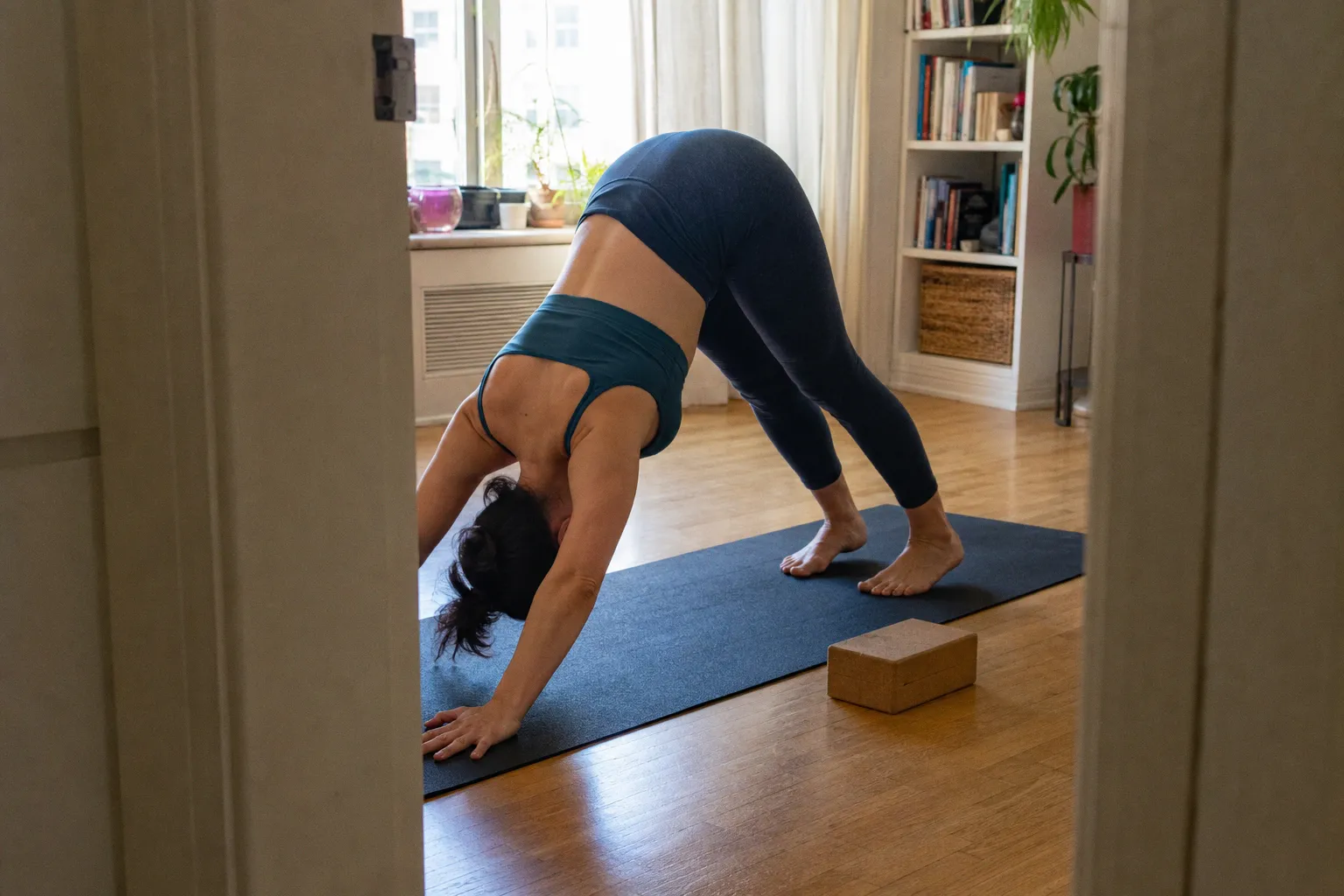
Static stretching involves holding a position for 15–60 seconds to lengthen muscles, and it is most effective when performed after a workout when the tissues are already warm and pliable. Dynamic stretching, by contrast, uses active movement through a full range of motion to raise blood flow and tissue temperature — that is a pre-workout tool, not a recovery tool. The two are not substitutes for each other. They are different jobs.
Static stretching after work wins because the muscle is warm, the nervous system is ready to downshift, and you are forcing a parasympathetic reset. Dynamic stretching after work just stirs the pot.
The American College of Sports Medicine recommends stretching exercises at least 2–3 days per week for most adults to maintain and improve joint range of motion. Two to three days is the floor, not the ceiling. If you train four, five, or six days a week, your stretching routine should mirror that volume — scaled to recovery, not skipped because the workout itself already felt like enough work. It is not.
Static vs Dynamic Stretching After a Workout: A Direct Comparison
Stop debating the two as if they were rivals. They are tools in different boxes. The table below is the only static vs dynamic stretching post workout breakdown you need:
| Parameter | Static Stretching | Dynamic Stretching |
|---|---|---|
| Primary use | Post-workout recovery | Pre-workout warm-up |
| Movement type | Held, still position | Controlled, active movement |
| Hold or rep time | 15–60 seconds per hold | 8–12 controlled reps |
| Nervous system effect | Downshifts to parasympathetic | Stays in sympathetic activation |
| Tissue temperature | Leverages existing warmth | Raises temperature |
| Effect on power output | Decreases when used pre-workout | Improves when used pre-workout |
| Range of motion gain | Improved via neural tolerance | Short-term, transient |
| Best timing | End of session, 2–3 days a week minimum | Start of session, every session |
The bottom row is the one most trainees ignore. Static stretching after exercise builds range of motion through repeated exposure over weeks. Dynamic stretching gives you a temporary window that closes within minutes if you do not load it. For a stretching after exercise comparison that actually changes your training, that distinction matters.
Why Static Stretching Wins for Recovery
Static stretching is the gold standard for the post-workout window for a reason that is more neurological than mechanical. You are not actually lengthening muscle tissue in a single session — what you are doing is teaching the nervous system that a deeper range of motion is safe. You are training the stretch reflex to stand down and let you into positions you could not access five sessions ago.
Here is what a properly executed static hold delivers in the ten to twelve minutes after your last set:
- A shift from sympathetic to parasympathetic nervous system dominance, which lowers heart rate and signals the body that the work is done.
- Improved tolerance to length, meaning your hamstrings and hip flexors will allow a deeper position next session without fighting you.
- Reduced subjective sensation of tightness, so you walk out of the session feeling like a human, not a rusted machine.
- Maintenance of joint range of motion, which compounds across weeks and months of consistent practice.
- A psychological reset that lets you separate the training block from the rest of your day.
The hold times are not negotiable. Anything under fifteen seconds is a tease, not a stretch. Anything over sixty seconds in a single position drifts into diminishing returns unless you are working a specific contract-relax protocol. The effective zone is 15–60 seconds, repeated two to three times per target muscle group. Set a timer. Do not guess. Do not bounce. Bouncing is ballistic stretching, which is a third category you do not need in a post-workout routine.
If your static stretch is not uncomfortable, you are not in the right position. Comfortable stretching is just standing around in a strange shape.
The Risks of Dynamic Movements After Exercise
Dynamic stretching has a real job, and it is not after your workout. Its job is before — raising tissue temperature, lubricating joints, and rehearsing the movement patterns you are about to load. Performed after work, dynamic stretching does three things, and none of them are good for recovery:
1. It keeps the nervous system in a sympathetic state, the exact opposite of what your body needs to begin repairing.
2. It recruits the same motor units you just fatigued, adding insult to a tissue that is begging for rest.
3. It masks the tightness you need to feel, so you walk out thinking you are recovered when you are actually under-recovered.
Performing static stretching before a workout can temporarily decrease muscle strength and power output, which is exactly why you do not use it as a warm-up. By the same logic, dynamic stretching after a workout is a warm-up pattern applied at the wrong time. It is borrowing a tool from the wrong trade and expecting it to do the job of the other one.
The narrow exception is light, controlled mobility work — something like a slow Jefferson curl, a banded shoulder pass-through, or a controlled 90/90 hip transition — performed as a transition out of the session, not as a "stretch." If the movement is loaded, controlled, and joint-focused, it can belong at the tail end of the cool-down as accessory mobility. If it is ballistic, repetitive, or flow-based, it belongs at the start of the session, not the end.
Structuring Your 10–12 Minute Post-Workout Flexibility Routine
A best post workout stretch routine is not a free-for-all. It is a deliberate block of work with a target, a duration, and a finish line. Pull this template into your next session and stop improvising.
| Phase | Duration | Target | Action |
|---|---|---|---|
| Transition | 60–90 seconds | Full body | Walk at a relaxed pace or box breathe to drop heart rate |
| Hip-dominant holds | 3–4 minutes | Hamstrings, glutes, adductors | 15–60 second holds, two rounds |
| Anterior chain holds | 2–3 minutes | Hip flexors, quads, pecs | 15–60 second holds, two rounds |
| Spinal segment holds | 2–3 minutes | Thoracic spine, lats | 15–60 second holds, one to two rounds |
| Breathing reset | 60 seconds | Diaphragm, nervous system | 4-second inhale, 6-second exhale, six rounds |
The total lands at roughly ten to twelve minutes, which is the typical duration for a comprehensive post-workout cool-down. That is not a suggestion; it is the dose-response window where static stretching delivers its return. Going longer is fine if you are using a contract-relax method, but do not pad the block with empty minutes to feel thorough.
Execution cues, because sloppy stretching is just standing around in a strange position:
- Hamstrings: hinge from the hips, lock the standing leg, and pull the chest toward the thigh. If your back is rounding, you are not stretching the hamstring — you are stretching your ego and your lumbar discs.
- Hip flexors: half-kneel, brace the core, tuck the pelvis under, and squeeze the glute of the back leg. Drive the hip forward only after the pelvis is locked. Do not arch the lumbar spine to "feel" it more. That is a back extension, not a hip flexor stretch.
- Pecs and lats: drive the elbow into a stable surface, drop the chest below the shoulder line, and hold. The stretch lives in the front of the shoulder and the side of the ribcage, not the neck. If your neck is doing the work, reset.
- Thoracic spine: kneel, hands behind the head, and extend the upper back over a foam roller or a bench edge. Brace the abs. Lock the lumbar out of the movement. Breathe into the stretch on the exhale.
Rep and set prescription for the entire block: two rounds through the hip and anterior chain work, one to two rounds through the spinal segment work, six rounds of the breathing reset. Time under tension is the metric, not "did I touch my toes." Touching your toes is a side effect, not the goal.
Managing Expectations: Stretching, DOMS, and Neural Tolerance
Let me set the record straight on what stretching does and does not do. It does not eliminate Delayed Onset Muscle Soreness. The research on DOMS and stretching is mixed, and anyone who tells you that a post-workout stretch session will erase tomorrow's soreness is selling you a fantasy. What stretching will do, consistently, is reduce the subjective sensation of tightness and improve your range of motion over weeks of practice.
It also does not "lengthen" your muscles permanently in a single session. That is not how tissue adapts. What you are training is neural tolerance to stretch — the nervous system's permission slip to allow a deeper position. The fascia, the sarcomeres, and the connective tissue respond over months, not minutes. Anyone promising overnight change is pitching a shortcut that does not exist.
Stretching is not recovery insurance. It is range-of-motion maintenance and a nervous system downshift. Treat it like training, not therapy.
If you are grinding through a plateau — the squat that stalls at parallel, the overhead position that locks at ear height, the pike compression that refuses to open — your stretching routine is part of the answer. It is not the whole answer. Strength work in the deep range of motion is the whole answer. Stretching is the auxiliary that lets the strength work reach further into positions you could not previously own. Skip the strength work and stretch forever, and you will be the most mobile, weakest person in the room.
Two to three days per week is the minimum frequency for flexibility training, but if you are training daily, you are stretching daily. Pair the post-workout block with a short, targeted mobility session on your off days — five minutes of hip openers and thoracic work is enough to maintain what you built. Consistency compounds. Boredom kills progress. So does perfectionism. Hit the minimum, repeat it for a month, then reassess.
Where This Leaves You
The stretching routine after workout is not a debate you need to keep relitigating. Static stretching wins the post-workout window because the tissues are warm, the nervous system is ready to downshift, and the hold times fit the recovery dose. Dynamic stretching is a warm-up tool deployed before work to raise tissue temperature and rehearse movement. If you swap those two roles, you are slowing your recovery and undermining your next session for no reason.
Pull ten to twelve minutes off the end of every workout. Pick four to six positions that target what you actually trained that day. Hold each one for 15–60 seconds. Repeat for two rounds. Breathe long on the exhale, slow and deliberate. Walk out of the session ready to come back tomorrow, not ready to collapse. That is the standard, and you do not get to negotiate it down because you are tired. Tired is the trigger to do the work, not to skip it.
That is the bar. Hit it.