People with strong chest and back muscles could be less at risk of a heart attack—here are six moves to tra...
Researchers using AI to scan routine cardiac images claim stronger chest and back muscles come with a lower risk of heart attack or premature death. Sounds like an excuse to skip leg day and worship the bench press?
The actual finding is more nuanced than the headline.
What the scans actually showed — and what they didn't
The study, published in Radiology, pulled imaging data from 1,722 people — mostly in their 50s, mostly already presenting with chest pain. An AI model measured muscle density across the thoracic region: back muscles, pectorals, the intercostals between the ribs. People with higher density had fewer heart attacks and fewer deaths over the following decade.
Caveat before you crown the bench press a cardiovascular intervention: density on a CT scan isn't a one-to-one with bench-press numbers. Density reflects tissue quality — low fat infiltration, high contractile fiber content — and that quality is a marker of habitual movement, not one hard session a week. In plain language: this is a correlation between active, metabolically healthier bodies and better cardiovascular outcomes, which is precisely what endurance training has been quietly promising for decades.
Senior author Michelle Williams of the University of Edinburgh — work partly funded by the British Heart Foundation — was reportedly so convinced by the data that she joined a gym and started clocking an hour of walking a day. A useful reminder that even the lead author did not interpret this as "skip cardio, do push-ups."
A chest-and-back circuit for your living room
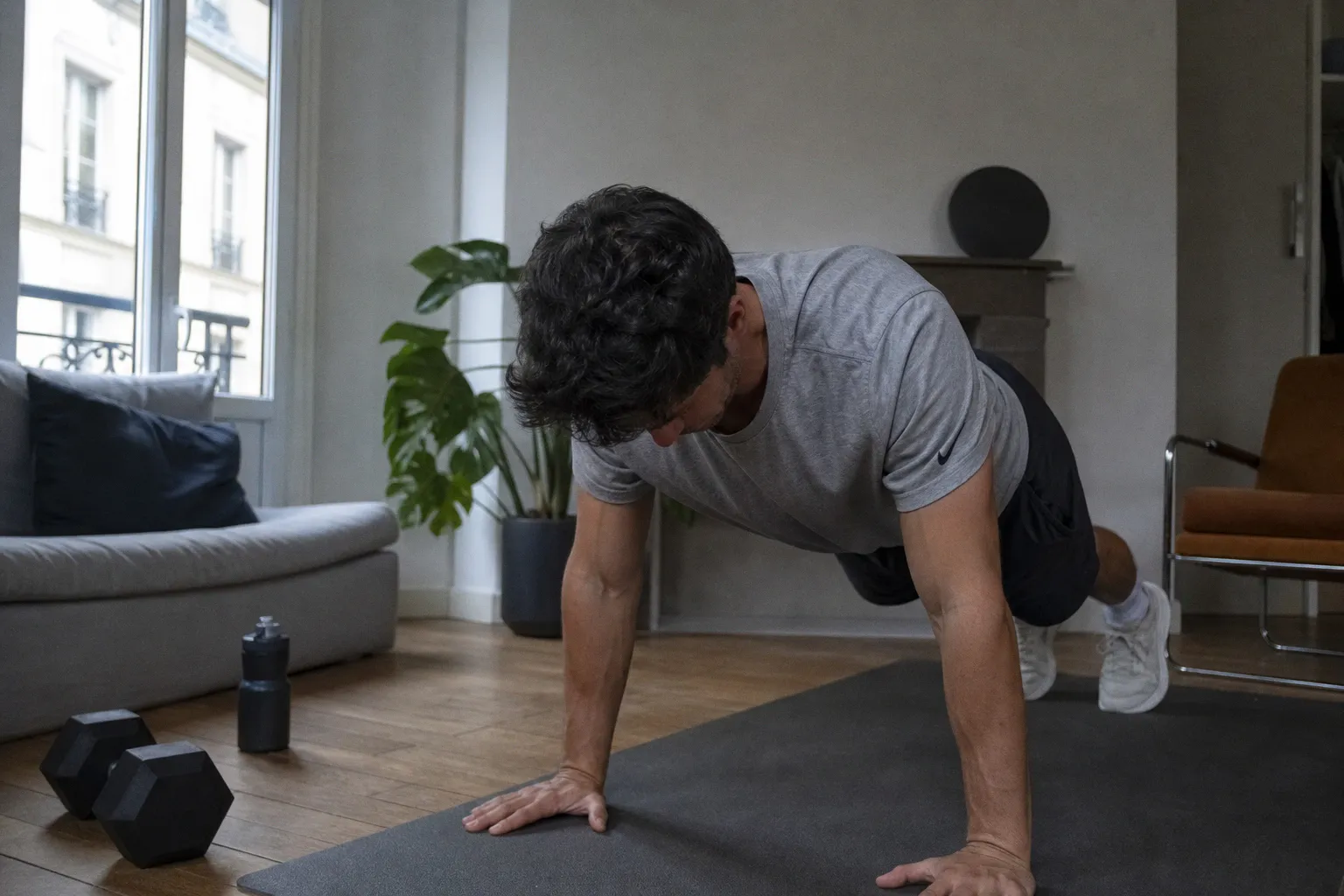
You need a pair of dumbbells and a mat. Aim for 8 to 10 reps per move, three rounds, 60 seconds of rest between rounds. Pick a weight that turns the last two reps of each set into a quiet negotiation with your future self.
1. Bent-over dumbbell row, underhand grip. Hinge to a 45° torso angle, palms facing you, pull the weights to your hips, and squeeze the shoulder blades at the top. The supinated grip lights up the lower traps.
2. Bent-over dumbbell row, overhand grip. Identical setup, palms now facing the floor. Mid-back and rhomboids take the load.
3. Dumbbell pullover. On your back, knees bent, one dumbbell cupped in both hands. Lower it behind your head with a soft elbow — feel the lats lengthen, then reverse. Pec and lat in a single rep.
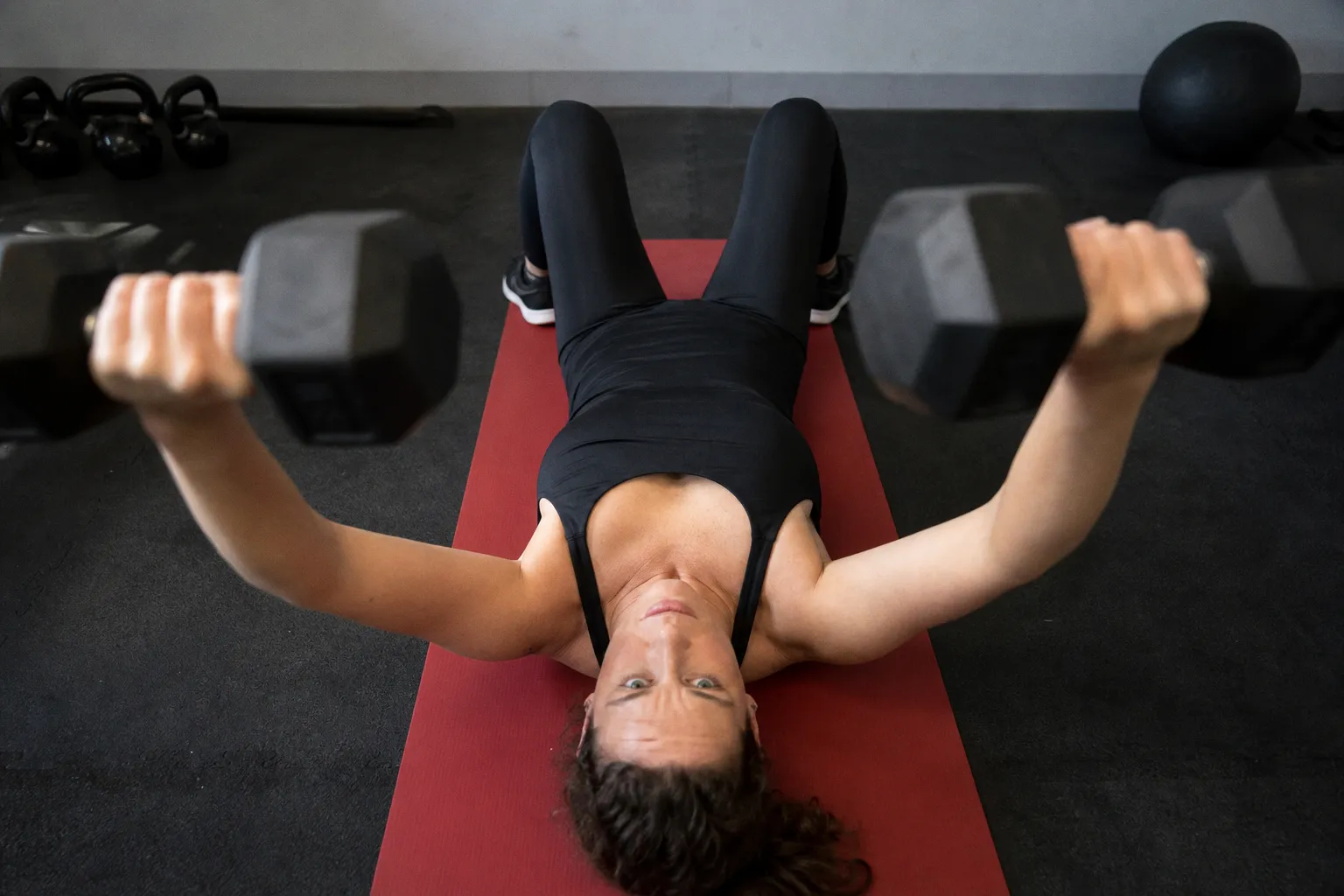
4. Floor dumbbell chest press. Knees bent, dumbbells at chest, palms forward. Lower until your upper arms touch the floor, then straight into the next rep — no rest at lockout.
5. Single-arm dumbbell chest press. Same position, one arm at a time. Builds anti-rotation core demand and corrects asymmetries.
The original protocol lists six moves; treat any sixth as a unilateral variation or a finisher targeting your weakest link.
The bigger picture
Williams herself flagged that far more research is needed before anyone can hand you a muscle-density target as heart-attack prevention. So don't read this as "lift heavy or die." Read it as one more reason to train the upper body with intention, walk every day, and stop skipping the boring basics.
That boring list includes eating enough protein to actually build the muscle you're training for — distributed across meals you can digest, not a single massive bolus your gut will fight you on. Skimp on the protein and you can do all the rows you want; the scan still won't budge. Hypertrophy happens between meals, when amino acids are available and sleep has been honest. The dumbbell is just the stimulus.