How to Interpret Fitness Tracker Data for Better Home Workouts
According to Gulf News, the fitness tracker’s most famous metric — 10,000 steps — was never built as a medical target.
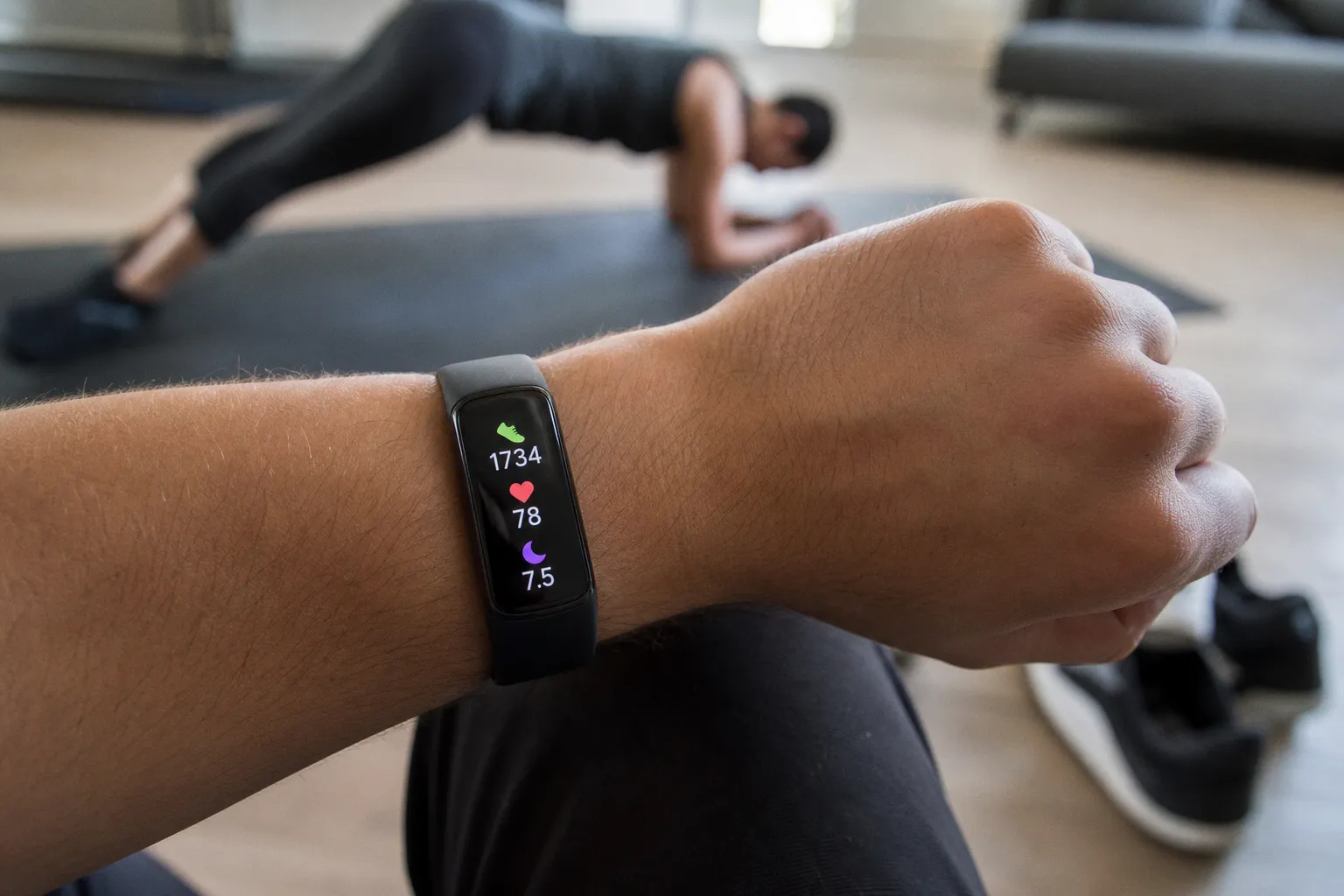
It began as the name of a Japanese pedometer. That matters for home training: a wearable can show a useful trend, but it cannot grade your workout, recovery or conditioning from one daily score.
For HIIT and bodyweight sessions, the dashboard is often noisier than the training itself. Heart-rate response over repeated sessions has value. A calorie total after one circuit does not.
The numbers worth tracking
Start with the least glamorous data: movement consistency, resting heart-rate trend and sleep-duration trend. Gulf News notes that the useful signal develops over weeks and months, not within one workout report.
Step count is a movement measure. Nothing more. A rising weekly average can show that daily activity is improving; hitting a fixed number on a single day proves little.
Resting heart rate is also personal data. Compare it with your own normal range, rather than another athlete’s number. During steady cardio, optical wrist sensors are generally reliable, according to Gulf News. During fast arm movement and high-intensity intervals, accuracy can fall. That is exactly the environment of burpees, kettlebell work, mountain climbers and shadow boxing.
For home HIIT, use heart rate to police pacing, not to chase a peak reading. If comparable sessions produce a consistently higher heart rate at the same workload, or the same rate at a lower workload, that is a training clue. One spike is sensor noise until proven otherwise.
Calorie burn is the weak link
Tom’s Guide reports that calorie counts can differ by 100 or more calories between devices after the exact same workout. That is not a small rounding error. It makes post-workout calorie burn a poor number for deciding how much to eat or whether a session “counted.”
Readiness and recovery scores need the same treatment. Gulf News says manufacturers use proprietary algorithms that differ, so the score is a rough guide, not a precise measurement. A green label does not establish readiness for hard intervals. A low label does not automatically require skipping them.
The practical rule is blunt: keep the device, keep the training log. Record the session type, work intervals, rest periods and whether performance held steady. A tracker can add heart-rate and sleep context. It cannot replace the actual output: rounds completed, reps maintained, pace and rest tolerance.
Buy the trend, skip the theatre
Tom’s Guide also found that modern wearables commonly deliver broadly similar step, distance and heart-rate data in walk testing, while elevation, pace reporting and calories can be inconsistent. For runners or outdoor sessions, moving pace is more useful than elapsed pace because it removes long stops. For a living-room workout, neither metric is central.
Prioritise dependable heart-rate monitoring, comfortable overnight wear and software that makes long-term trends easy to read. Battery life is not a luxury metric here; missed nights and abandoned wear create incomplete data.
Verdict: use the tracker for trends; skip the daily-score theatre. If it helps you train consistently and review your own baseline, it earns wrist space. If it turns every HIIT session into a calorie-burn contest, it is dead weight.