What Heart Rate Variability Means on Your Fitness Tracker—and Whether It's Worth Paying Attention To
One hard number is confirmed: 44% off a bestselling fitness tracker, according to two UK regional outlets.

The softer claim is more important for training: Real Simple is framing heart rate variability on fitness trackers as a metric users may need to understand before treating it as useful. For home HIIT, that matters because a wrist metric can look authoritative while still not telling you what to do next.
HRV is being sold as a signal. The evidence here is thin.
Real Simple’s headline puts the issue plainly: what heart rate variability means on a fitness tracker, and whether it is worth paying attention to.
That is the entire confirmed substance available from the source snippet. No device model. No testing protocol. No accuracy comparison. No claim that HRV should change your interval structure, recovery day, or cardio load.
So the useful read is not “HRV is useless” or “HRV is essential.” Neither is supported here.
The useful read is this: consumer fitness trackers are pushing HRV into the daily dashboard, and mainstream lifestyle coverage is now trying to explain whether that number deserves attention. That usually happens when a metric has crossed from niche endurance circles into the mass-market wrist economy.
For HIIT users, that creates a basic problem. A number appears. It looks clinical. It may influence behavior. But the snippet does not confirm that the number is accurate enough, individualized enough, or actionable enough to prescribe training changes.
That is the gap.
The 44% discount changes the buying equation, not the physiology
WarwickshireWorld and Shropshire Star both report that Amazon has cut 44% off a bestselling fitness tracker in a limited-time deal.
That is a real market signal. Not a performance signal.
A discounted tracker may be cheaper today. It does not become a better recovery tool because the price dropped. The reports, as available here, do not confirm the brand, model, sensor package, HRV method, battery life, app cost, or training features.
That matters if you train at home.
A tracker can be useful if it keeps you consistent with sessions, gives you a visible cardio habit loop, or stops you guessing during intervals. But those are use cases. They are not confirmed claims from these sources.
The only confirmed buying fact is the discount: 44%. The only confirmed product description is “bestselling fitness tracker.” That phrase is retail language. It does not tell you whether the device is good for sprint intervals, steady-state cardio, mobility work, or recovery tracking.
Price cut: confirmed. Training value: not confirmed.
How to treat the HRV number without getting played
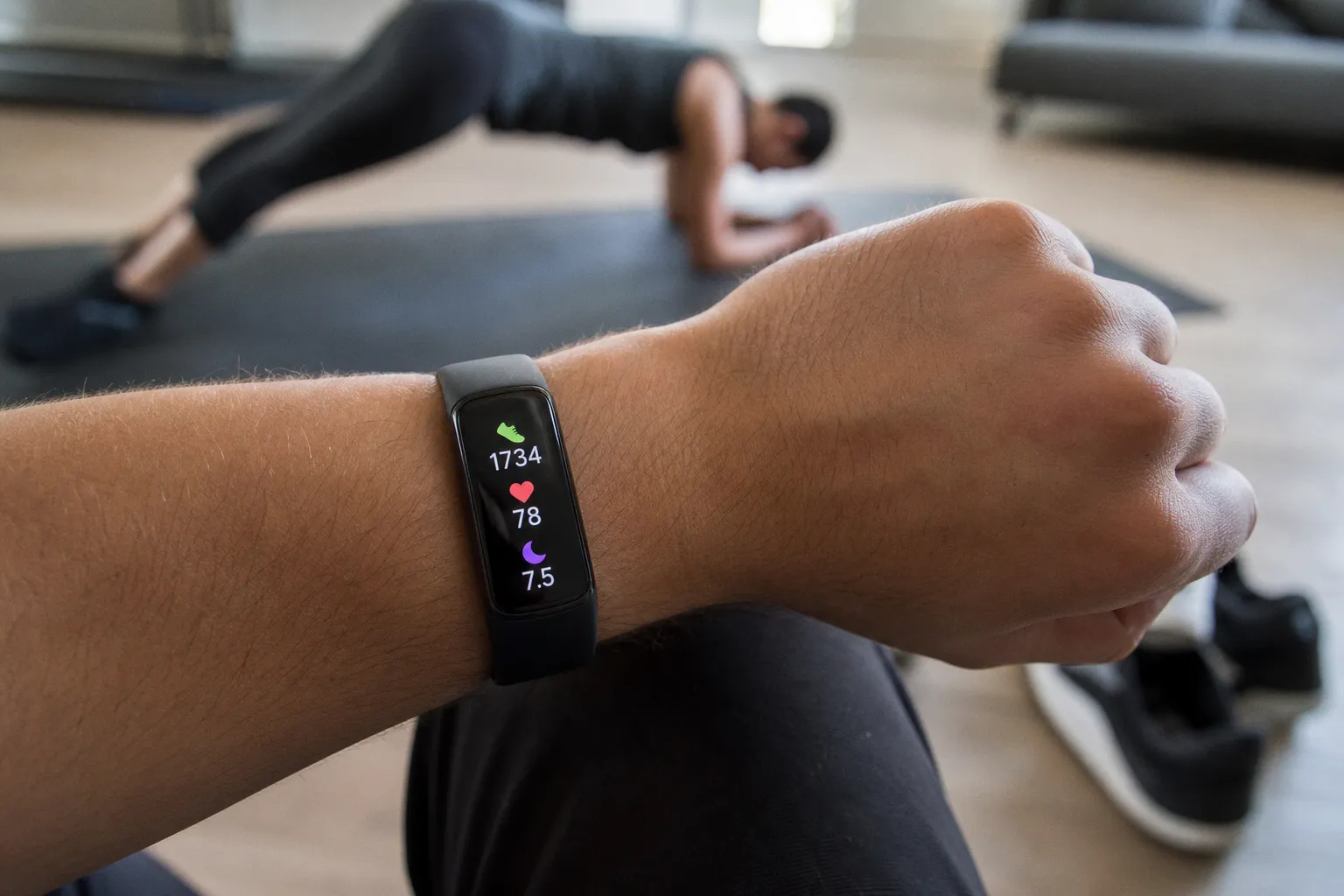
If your tracker shows HRV, do not let one dashboard tile rewrite your training plan.
The available reporting does not support that. It only confirms that HRV meaning and attention-worthiness are being discussed, and that discounted trackers are being promoted in parallel. That combination is exactly where users overpay for certainty.
For home HIIT, the practical stance is simple:
Use HRV as a question mark, not a command.
If a tracker flags something, ask better questions. Did the session quality drop? Did your intervals fall apart? Did you skip warm-up work? Did your recovery day become another threshold workout? Those are training checks you can observe without pretending the device has laboratory authority.
And if you are looking at the discounted tracker, strip the deal down to ROI.
Will you actually use it every day?
Will it help you time intervals, log sessions, or maintain consistency?
Are you buying it for features you understand, or for a recovery metric you cannot interpret?
A 44% cut can make a weak purchase less expensive. It cannot make vague data more actionable.
Verdict: pay attention to HRV coverage, but do not train by headline. Buy the tracker only if the core functions fit your routine. Pass if the main hook is a discounted promise of recovery insight that the available reports do not verify.