Fitbit Inspire 2 review: Its simple and my perfect fitness tracker
A 20%+ calorie-burn error rate is enough to kill most tracker hype. That is the useful part of Mashable’s Fitbit Inspire 2 review: the device is not treated as a lab instrument, but as a low-friction…

A 20%+ calorie-burn error rate is enough to kill most tracker hype. That is the useful part of Mashable’s Fitbit Inspire 2 review: the device is not treated as a lab instrument, but as a low-friction benchmark tool for daily movement, cardio minutes, and home-training consistency. For anyone doing HIIT, Peloton-style rides, walks, or bodyweight sessions at home, that distinction matters.
Simple metrics beat data bloat
The review frames the Fitbit Inspire 2 as the opposite of a high-friction performance platform. The writer had tried a Whoop, DIY Peloton setup, a real Peloton, a Gatorade sweat patch, SoulCycle’s at-home bike, walks, and even a half-marathon run in a small backyard. Some tools stuck. Whoop did not.
The reason given is blunt: too complex for an average user.
That is not a knock if you are training like an elite athlete. The review specifically notes that Whoop or similar systems may fit serious training use. But the Inspire 2 wins here because it does less. It gives basic daily activity benchmarks without turning every recovery score, breathing stat, and notification into another thing to manage.
Setup is described as easy: Bluetooth pairing, basic details like weight and height, then tracking starts. No ceremony. No dashboard maze.
For home fitness, that is the real feature. A tracker that gets worn beats a “better” tracker that lives in a drawer.
Steps, active minutes, and zones: useful, not sacred
Fitbit’s old core metric still appears: steps. The review does not treat step count as the final word on fitness, which is correct. A 10,000-step target is described as a clean benchmark, not a physiological law.
That works for remote workers. The example is simple: look down during a couch-based workday, see roughly 2,500 steps, and get up. No motivational poster required.
The stronger metric for HIIT and cardio users is “zone minutes.” The Inspire 2 tracks workouts and gives a readout of active minutes, including time spent in fat-burn cardio and peak cardio output. The review compares the concept to Orangetheory Fitness, where effort zones are part of the class structure.
That makes the Inspire 2 more relevant than a basic pedometer for home training. If you do intervals, cycling, brisk walks, or mixed bodyweight circuits, zone minutes give you a rough load signal. Not VO2 max. Not lactate threshold. Just a practical intensity marker.
And rough is the key word.
The review cites a study finding that no fitness tracker had an error rate below 20 percent for calories burned. That should end the calorie-precision fantasy. Use the device to compare your own days over time. Do not use it to justify food math to the last bite.
In a broader tech context, this is the same problem many digital systems are trying to solve: reduce complexity without pretending the model is perfect. That point also shows up in discussions of AI making complex systems simpler, though fitness wearables need the same restraint. More data is not automatically better data.
The home-training verdict: do, but do not obsess
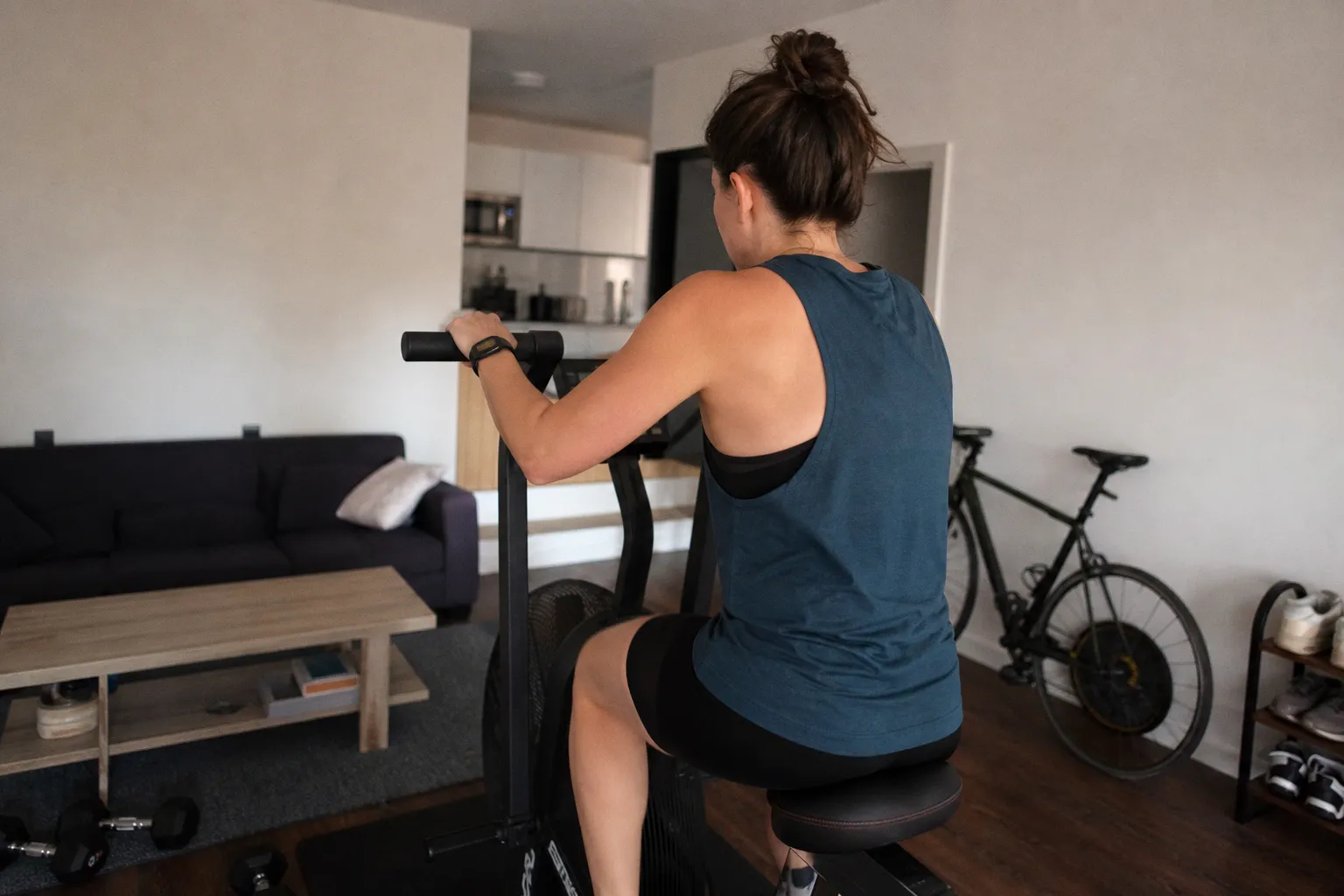
The Inspire 2 review lands on a narrow use case: basic tracking, low mental load, and enough screen-level feedback that the user does not need to keep pulling out a phone. It automatically categorized a Peloton ride as intense activity, tracked zone minutes, and showed day-by-day activity patterns in the app.
That is enough for most home users.
It is not enough if you need deep recovery analytics, detailed physiological modeling, or athlete-grade decision support. It is also not a pass to micromanage every hour. The reviewer specifically did not want anxiety from stand reminders, circle-closing pressure, or deep breathing data.
That is the best argument for the device.
For HIIT and home cardio, the Inspire 2 looks like a “do” if your goal is consistency: steps, active minutes, zone minutes, weekly patterns. Clean inputs. Low drag.
Pass if you want precision calories or advanced training diagnostics. The ROI is poor when the metric is not accurate enough to carry that much decision weight.