Can Whole-Body EMS Actually Replace Traditional High-Intensity Strength Training?
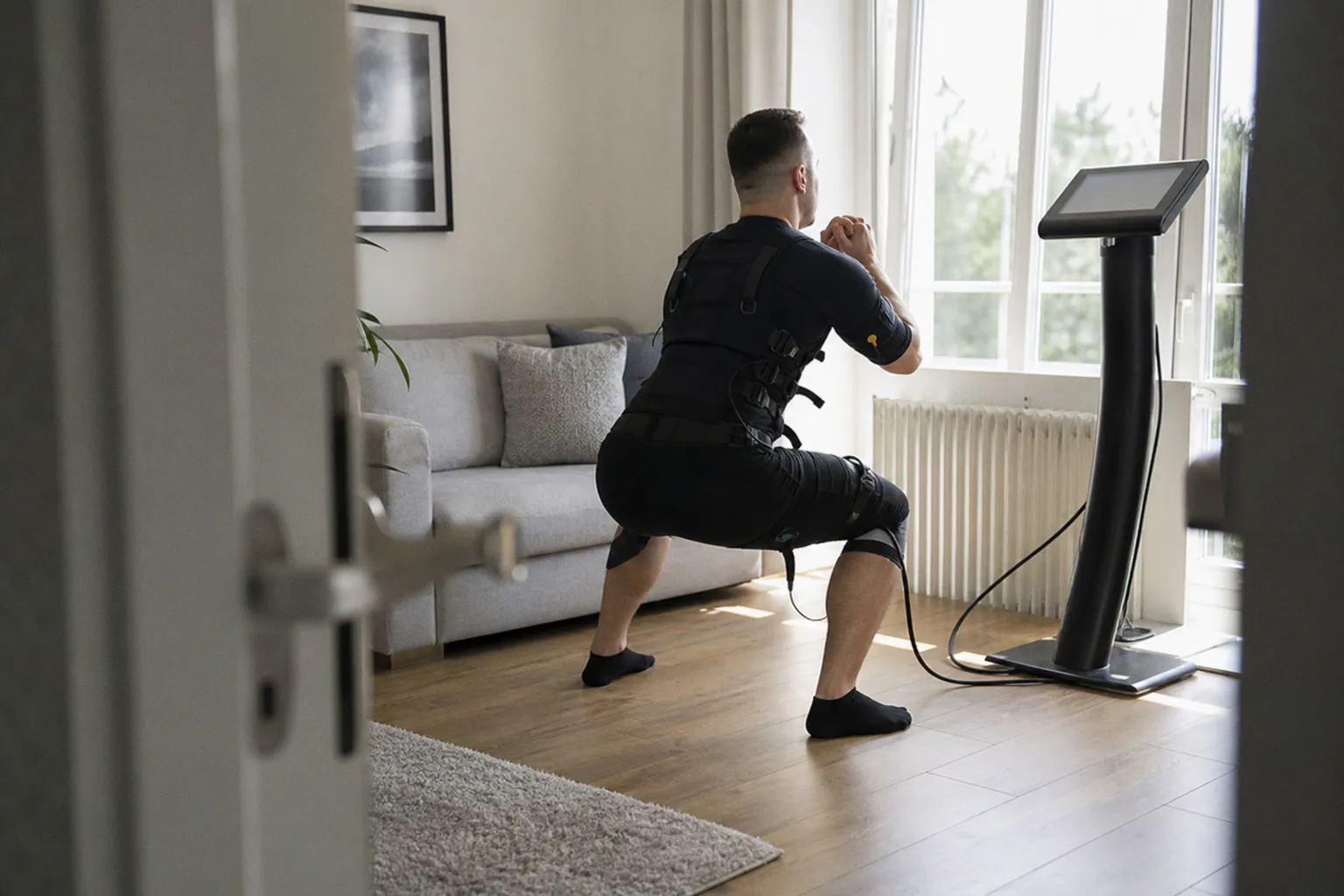
According to Forbes, a randomized controlled study found that whole-body electromyostimulation, or WB-EMS, produced nearly identical muscle-mass and strength gains to traditional high-intensity resistance training.
That is a real signal for the home-fitness crowd—but don’t make the rookie mistake of reading it as permission to stand still in a suit and call it strength work.
WB-EMS uses electrical impulses to trigger muscle contractions. The headline result is about outcomes in a specific study, not a blank check for every gadget, every protocol, or every person skipping the hard part: training with intent.
The suit is not your form
A hard push-up starts before the first rep. Set your hands. Lock your ribs down. Brace the hollow body. Squeeze the glutes. Then lower under control and press the floor away without letting the shoulders dump forward.
An electrical impulse cannot do those jobs for you.
That matters because bodyweight strength is not simply a question of whether a muscle contracts. You have to create position, control the range, and keep tension when the rep gets ugly. Pull your shoulder blades into retraction on rows. Keep the pelvis from tipping on hanging work. Own the bottom of a split squat instead of bouncing through it.
The reported study result makes WB-EMS worth watching as a training option, particularly for people drawn to high-intensity work in a low-impact format. It does not erase the value of practicing the actual movements you want to improve.
Treat convenience like a tool, not a loophole
Forbes reports that EMS workouts are marketed around short sessions and that at-home suits are available in the US. Fine. Efficient training has a place. But the obsession with replacing effort is where fitness gets soft.
If you choose WB-EMS, keep a movement standard beside it. Pair the session with work that requires you to control your own body: a strict squat pattern, a push, a pull, a hinge, a brace. Don’t chase random fatigue. Chase repeatable positions and cleaner reps.
And stop confusing screen time with recovery. If a rest break becomes a detour into running retro Flash games with a browser emulator, set a timer before you start. Your next set needs your attention, not a lost ten minutes.
What to watch next
The useful question is not “Can EMS build muscle?” The study cited by Forbes suggests it can deliver gains close to traditional high-intensity resistance training. The useful question for you is whether it helps you train consistently without replacing the strength skills your bodyweight goals demand.
Keep the baseline brutally simple: 3 sets of 6–12 controlled push-ups, bodyweight rows, split squats, and hollow-body holds. Stop each set when you cannot keep the brace, scapular position, or full range. Add assistance when needed; do not trade mechanics for ego.
Use technology if it gets you training. But you still have to brace, squeeze, pull, and earn the rep.